offshore renewables


Offshore wind, with more decarbonisation potential per MW installed than other renewable energy sources, will be a core technology to deliver the large-scale, reliable, affordable, and zero-carbon power needed to accelerate the global energy transition. Decarbonisation also offers European nations the opportunity gain energy independence from its reliance on fossil fuel by exploiting its vast domestic renewables resources.
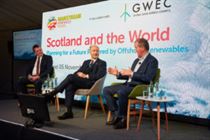
Industry leaders, supply chain, government and stakeholders joined together during this two-day event to discuss the scale of the opportunity offshore wind represents and how innovative grid infrastructure will lead to increased jobs, competitiveness, along with positive environmental impacts. In addition to offshore wind, the role of other marine energies and innovation and their role in the pathway to Net Zero were also examined during this session.
Programme
the energy system of tomorrow - what is it and what do we need to get there
The energy transition is already underway, with a major shift from fossil fuels to renewable sources. Sparked by rapid innovation, a flood of capital and evolving regulation, business models have been developing rapidly to create more resilient economies and energy systems. New energy systems will start to emerge, more integrated and sustainable. What will those systems look like? Just what must we change to support their formation. And how can we make sure we participate in the transition? Join Mainstream Renewable Power’s discussion on the energy systems of tomorrow to engage in the conversation.
Gillian Watson (Moderator) – Managing Director, Energy & Renewables, Noble & Co.
Mary Quaney – Group CEO, Mainstream Renewable Power
Tim Lord – Senior Fellow | Net Zero, Tony Blair Institute for Global Change
Kingsmill Bond – Energy Strategist, The Carbon Tracker
offshore wind: the global backbone of a new power system - what offshore can do
According to GWEC’s report, offshore wind capacity grew by 6.1 GW in 2020, but the global fleet is only 2% of what the world needs to get to net zero by 2050. Offshore wind has the biggest growth potential of any renewable energy technology, but the policy environment needs to improve rapidly for offshore wind to reach international Net Zero targets. Based on IRENA’s target of 2,000 GW, which would be required to achieve carbon neutrality and sustain a Paris-compliant pathway, governments will need to act decisively to improve policy in order to scale up installations at the pace required to help the world meet its carbon emissions targets and avoid the worst effects of global heating. The Mainstream Renewable Power’s panel discussed what offshore wind can really do.
Cameron Smith (Moderator) – General Manager APAC & Offshore, Mainstream Renewable Power
Sonja Chirico Indrebo – Vice President Floating Offshore Wind, Equinor
Mariangiola Mollicone – Head of Renewables, Eni
Marc Becker – CEO Offshore, Siemens Gamesa
Andrew Jamieson – CEO, ORE Catapult
global corporate PPA market from the corporate perspective
This session featured the KPMG Global PPA Leader Wafa Jafri in conversation with Mike Hayes, discussing the global Corporate PPA market from the corporate perspective. It explored the realities of the global corporate power purchase agreement market from the perspective of the corporate customer, touching on issues such as why net zero is a game changer and the relevance of the Scope 3 challenge, why the accounting treatment is critical to corporates and the opportunity for the offshore wind sector in the global corporate power purchase agreement market.
Mike Hayes – Global Lead Renewables and Decarbonisation, KPMG
Wafa Jafri – Global PPA Leader, KPMG
emerging markets: where will offshore renewables go next
Offshore wind provided a strong alternative to fossil fuels in the energy mix and with falling costs it is becoming a reality for more and more markets globally. This has resulted in a huge growth of planned projects in emerging markets. World Bank have mapped the technical offshore potential of 100 countries, Brazil, India, Morocco, the Philippines, South Africa, Sri Lanka, Turkey and Vietnam combined have the wind resource to power all EU countries three times over. The GWEC’s panel discussed where offshore wind will go next and what this means for those markets.
Alastair Dutton (Moderator) – Chair, Global Offshore Wind Task Force, GWEC
Neil Douglas – Director, BVG Associates
Elbia Gannoum – CEO, ABEEólica
Anna Freeman – Policy Director, Clean Energy Council (Australia)
Denise Fontanilla – European Climate Foundation
an interconnected europe: deliverying a european offshore grid
Europe must prepare for the biggest energy transformation in history, and it must happen at a speed unparalleled in history. Decarbonisation offers European nations the opportunity to gain energy independence from its reliance on fossil fuel by exploiting its vast, domestic renewable resources. To achieve it, Europe needs dramatically increased power system capability and flexibility in the coming decades to accommodate renewables. This must be provided for by increased interconnection and innovative grid infrastructure, not least in the offshore space where no grids exist today.
If we get it wrong – if we deploy sub-optimal infrastructure – it will cost jobs and competitiveness. If we get it right, the commercial opportunities and environmental impacts will be vast.
This panel discussion began with a keynote address by former EU Energy Commissioner, Andris Piebalgs, and went on to discuss how Europe could identify and eliminate technical and regulatory infrastructure challenges and bottlenecks to timely and cost-effective production and use of Europe’s offshore renewable energy resource.
Christian Kjaer (Moderator) – Chief Public Affairs Officer, SuperNode and former CEO, WindEurope
Andris Piebalgs – Former EU Commissioner for Energy
Goran Strbac – Professor of Energy Systems, Imperial College London
Nicola Medalova – Managing Director, National Grid Interconnectors
Gerald Kaendler – Chairman ENTSO-E System Development Committee and Director Asset Management, Amprion.
Eddie O’Connor – Chairman, SuperNode Ltd and founder of Mainstream Renewable Power Ltd
marine energy and innovation: a pathway to net zero
Our current climate crisis is driving innovation in energy generation. It is increasingly clear that we must change how we generate, distribute, and consume electricity. To match our current level of generation and the predicted four-fold increase, we need a diverse mix of technologies to electrify our energy system. Today, the UK leads in ocean energy: harnessing the waves against our shores and the predictable tides around our islands. Our coastline has a staggering 35% of Europe’s wave resource and 50% of the tidal resource. Estimates predict 20% of UK electricity could be supplied by ocean energy. Meet the leaders in this field and their aspirations to support our global blue economy and route to Net Zero.
Andrew Scott – CEO Orbital Marine Power
Keith Murray – CFO QED Naval
Max Carcas – Sustainable Marine Energy
Patrik Moller, CEO Corpower Ocean
Martin Carruth – BD Director, Marine Power Systems
Sue Barr – Chair, Marine Energy Council


news
Mainstream Invests £5 million to Build Scottish Wind Turbine Plant

Mainstream Signs Option for Scottish Offshore Wind Farm Infrastructure